SDG 1 - No Poverty
When we talk about poverty, we often think about lack of money. But poverty can also take other forms: not being able to travel, not having access to a computer, lacking information, not knowing where to find support, or not feeling legitimate enough to take part in a project.
SDG 1, “No Poverty”, invites us to look at these realities more widely. It is not only about responding to immediate material needs, but also about understanding what prevents some people from accessing the same opportunities as others.
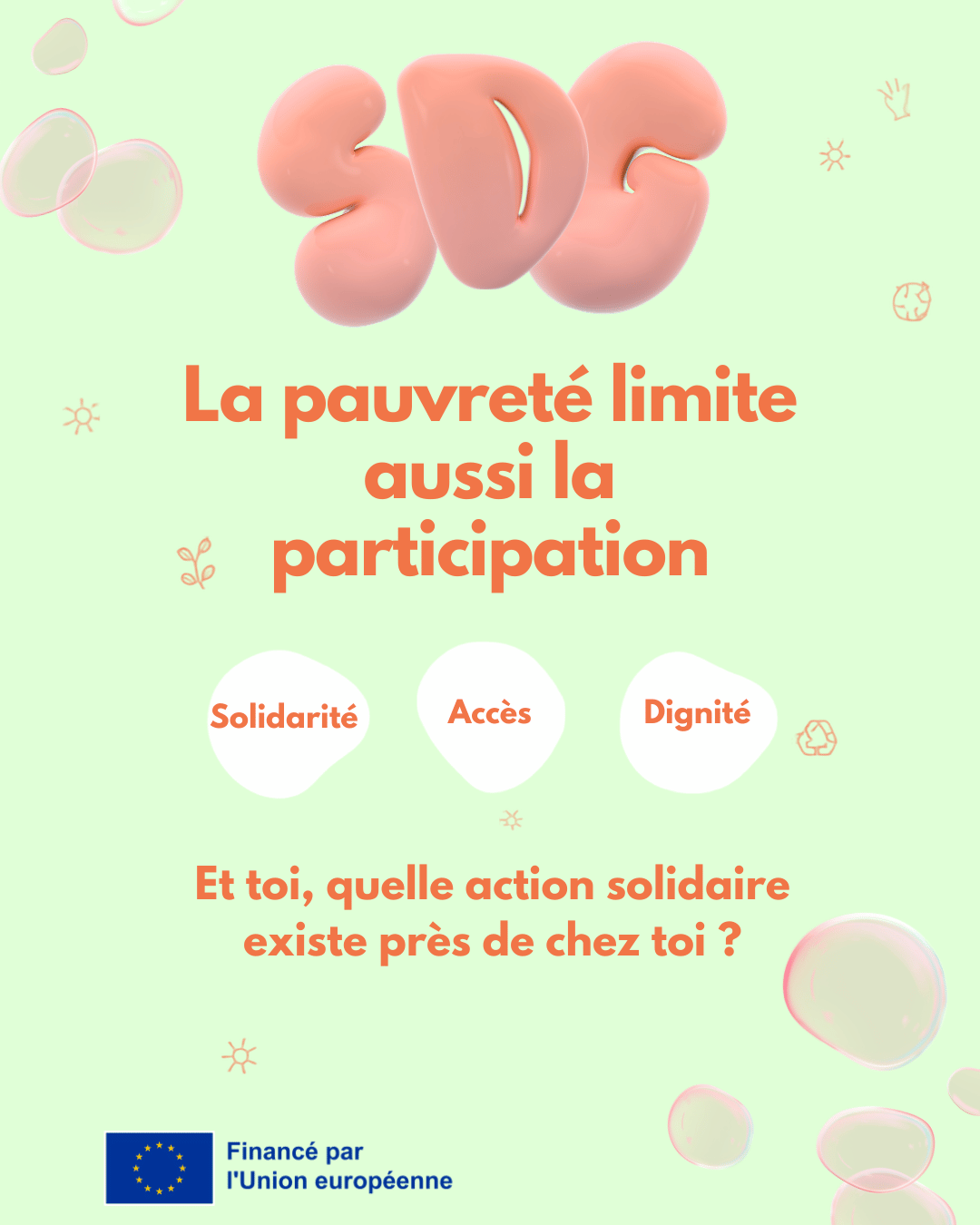
Why poverty also limits participation
Taking part in a workshop, training course, community project or local initiative requires several conditions: time, information, confidence, sometimes transport, sometimes an internet connection or equipment.
When these conditions are not in place, many young people remain outside participation spaces, even when they have ideas, skills and the motivation to act. Poverty can therefore become an invisible barrier to civic participation.
Through SDGenius, Association Petite Graine wants to make the Sustainable Development Goals more accessible to young people aged 16 to 30, especially those living in rural areas or facing fewer educational, civic or digital opportunities.
Understanding SDG 1 also means opening doors
Fighting poverty also means creating the conditions for everyone to learn, express themselves, join an activity, meet others and take part in collective life.
A local action can be simple, but useful: sharing information about available support, helping a local association, organising a collection, creating a peer support space for young people, helping someone with an administrative process, or listening to someone’s needs before proposing a solution.
Sustainable development also starts with dignity, access to opportunities and the possibility to participate. If a young person cannot join a discussion, their voice risks disappearing. SDGenius wants to show that every young person should be able to understand global challenges and contribute to local responses.
Share a local solidarity action: what initiative already exists near you, or what action would you like to see in your town, village or school?
Co-funded by the European Union. Views and opinions expressed are however those of the author(s) only and do not necessarily reflect those of the European Union or Agence Erasmus+ France Jeunesse & Sport.